




The real estate sector has long been considered a cornerstone of wealth creation and investment. Traditionally, investing in property required substantial capital, extensive legal procedures, and a deep understanding of market dynamics. However, with the advent of blockchain technology, a new era of real estate investment has emerged: real estate tokenization. Real estate tokenization platform development has transformed the way investors approach property markets, offering unprecedented opportunities for diversification, liquidity, and efficiency. In this article, we will explore the key benefits of real estate tokenization platform development for investors and explain why this innovation is poised to reshape the investment landscape.
Understanding Real Estate Tokenization Platform Development
Before delving into the benefits, it is crucial to understand what real estate tokenization entails. Tokenization refers to the process of converting ownership rights of a real-world asset into digital tokens on a blockchain network. These tokens represent fractional ownership of the property and can be bought, sold, or traded in a secure and transparent environment.
A real estate tokenization platform is a technological ecosystem that facilitates this process, offering investors a seamless interface to access tokenized property assets. The platform handles legal compliance, smart contract management, digital wallets, and trading mechanisms, ensuring a smooth investment experience. By developing such platforms, companies provide investors with a streamlined way to access global real estate opportunities without the barriers of traditional investment methods.
Increased Liquidity and Accessibility
One of the most significant advantages of real estate tokenization platform development is enhanced liquidity. Traditional real estate investments are typically illiquid, requiring months or even years to sell a property or exit an investment. Tokenization changes this dynamic by allowing fractional ownership of real estate assets, which can be traded on secondary markets with relative ease.
Investors can purchase tokens representing a fraction of a commercial building, residential property, or mixed-use development, and later sell those tokens to other buyers without the delays associated with conventional property transactions. This liquidity opens real estate investment to a broader range of investors who may not have the capital to buy entire properties but wish to participate in high-value real estate markets.
Moreover, tokenized assets can be accessible globally, enabling investors to diversify their portfolios across countries and regions without the need for local intermediaries or complex legal procedures. This democratization of real estate investment ensures that a wider audience can participate, leveling the playing field for small and medium investors.
Fractional Ownership and Diversification
Real estate tokenization platform development also empowers investors through fractional ownership. Investors no longer need to commit substantial sums to acquire a full property. Instead, they can own a fraction of a property by purchasing tokens that represent specific ownership rights.
Fractional ownership enables investors to spread their capital across multiple properties, reducing risk exposure and improving portfolio diversification. For instance, an investor can hold tokens in commercial properties in one region, residential complexes in another, and industrial real estate elsewhere, all within the same portfolio. This diversification mitigates market volatility and enhances the potential for stable returns.
Additionally, fractional ownership allows investors to participate in high-value real estate projects that would otherwise be inaccessible due to financial constraints. By lowering the entry barrier, tokenization platforms create opportunities for wealth generation and long-term growth, appealing to both retail and institutional investors.
Enhanced Transparency and Security
Transparency and security are critical concerns for real estate investors. Traditional property investments often involve opaque processes, manual documentation, and reliance on intermediaries for legal verification. Real estate tokenization platforms address these challenges by leveraging blockchain technology.
Blockchain ensures that all transactions are recorded in an immutable ledger, providing a clear audit trail of ownership, transfers, and investment activity. Smart contracts automate legal agreements, reducing the likelihood of disputes and errors. These features enhance investor confidence, as ownership rights and transactions are verifiable, secure, and tamper-proof.
Furthermore, the integration of blockchain reduces dependency on third-party intermediaries, streamlining operations and lowering costs. Investors benefit from increased transparency, faster transaction processing, and improved security, creating a more reliable investment environment.
Cost Efficiency and Reduced Transaction Barriers
Real estate tokenization platform development significantly reduces costs associated with property investment. Traditional real estate transactions often involve multiple intermediaries, including brokers, lawyers, notaries, and banks, each adding fees and delays. Tokenization platforms streamline these processes through automated smart contracts, digital wallets, and secure trading mechanisms.
By reducing reliance on intermediaries, investors can enjoy lower transaction fees, faster settlement times, and simplified legal compliance. Additionally, tokenization eliminates geographic constraints, enabling cross-border investments without the administrative burden of traditional methods.
This cost efficiency not only benefits investors but also encourages more frequent transactions and broader market participation. Investors can reinvest capital more quickly, optimize portfolio allocation, and take advantage of emerging real estate opportunities without incurring prohibitive costs.
Global Market Access and Cross-Border Investment
Real estate tokenization platforms open doors to global markets, allowing investors to participate in international property opportunities. In the past, investing in foreign real estate was complex, involving currency exchange, legal compliance, and unfamiliar market dynamics. Tokenization simplifies this process by enabling digital ownership of tokenized assets, which can be traded on a global platform.
Investors gain access to diverse property types, including commercial, residential, and industrial real estate in multiple regions. Cross-border investments are made easier through digital wallets and blockchain-based compliance mechanisms, which manage regulatory requirements and facilitate secure transactions.
Global market access allows investors to capitalize on emerging markets, high-growth cities, and profitable real estate sectors, enhancing returns and providing geographical diversification. This access transforms real estate investing from a local or regional endeavor into a global opportunity.
Streamlined Compliance and Regulatory Support
Compliance and regulatory challenges have traditionally hindered real estate investment. Tokenization platforms address this issue by embedding compliance mechanisms within the platform architecture. Smart contracts enforce rules related to ownership, transfer, and investment limits, while blockchain records ensure adherence to legal and regulatory frameworks.
Real estate tokenization platform development allows for automated KYC (Know Your Customer) and AML (Anti-Money Laundering) procedures, ensuring that investors meet legal requirements before participating in the platform. This reduces the risk of regulatory violations and simplifies auditing for both investors and platform operators.
By providing built-in compliance support, these platforms create a secure and legally sound environment for investment, making it easier for both retail and institutional investors to participate confidently.
Improved Efficiency and Reduced Settlement Times
Traditional real estate transactions often involve lengthy processes, including property inspections, legal verification, and financial settlement, which can take weeks or months. Tokenization platforms significantly enhance efficiency by automating many of these processes through blockchain and smart contracts.
Investors can acquire or sell tokens representing property ownership with minimal delays, as transactions are processed digitally and settled almost instantly. This efficiency allows investors to respond quickly to market opportunities, optimize investment timing, and manage portfolios more dynamically.
Additionally, the reduced settlement time lowers the risk of price fluctuations and ensures smoother capital flow, enhancing investor confidence and market participation.
Enhanced Liquidity Through Secondary Markets
Tokenized real estate assets can be traded on secondary markets, creating a dynamic ecosystem where investors can buy and sell ownership stakes freely. This liquidity is a game-changer for the real estate sector, where traditional properties often take months to sell.
Secondary markets allow investors to exit their positions without waiting for long-term sales, providing flexibility and the ability to manage cash flow effectively. This liquidity also attracts more investors, driving market activity and creating opportunities for price discovery based on demand and supply dynamics.
By offering a liquid investment vehicle, real estate tokenization platforms bridge the gap between traditional illiquid real estate and modern digital asset trading, appealing to investors who value flexibility and quick access to capital.
Data-Driven Insights and Smart Investment Decisions
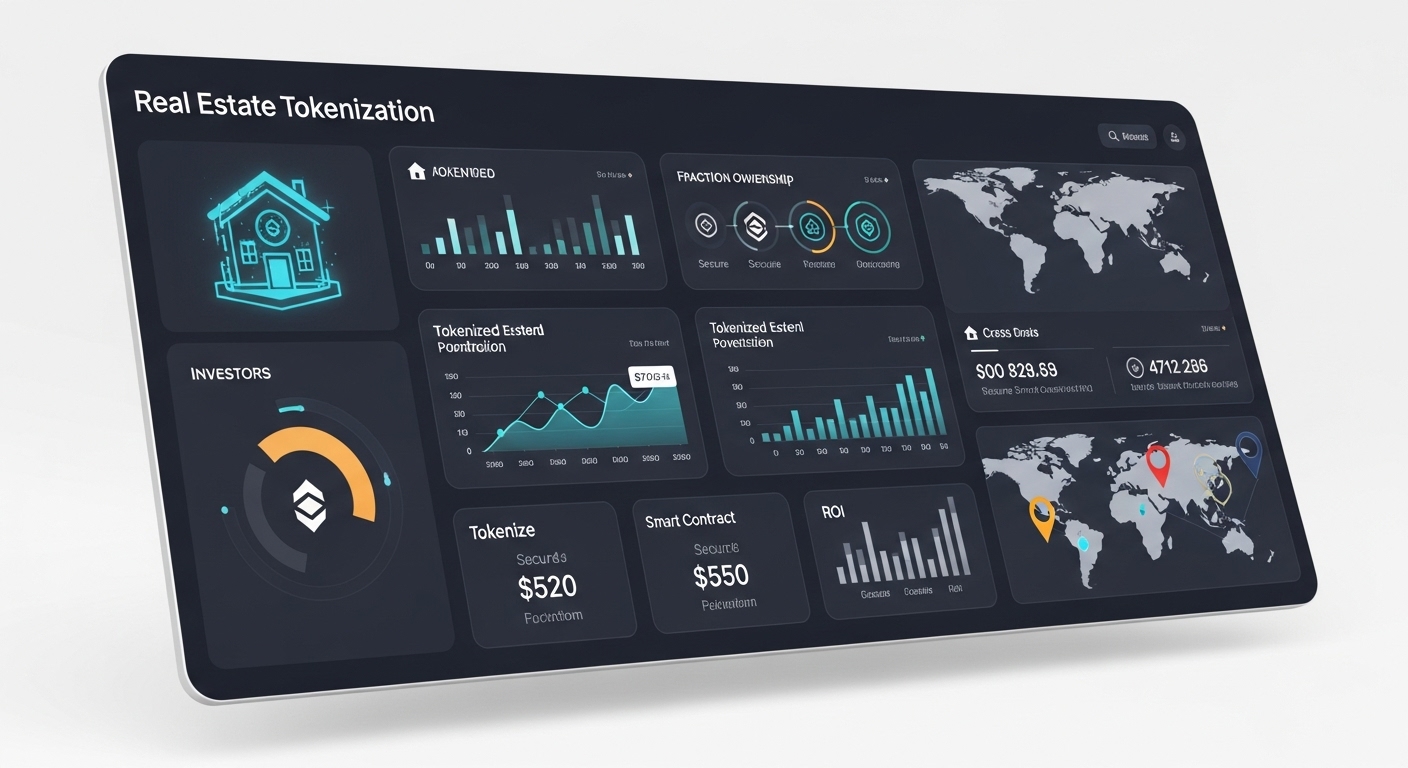
Real estate tokenization platforms often provide analytical tools and dashboards that enable investors to make informed decisions. Data on market trends, property valuations, rental yields, and transaction history is accessible in real-time, allowing investors to assess risk and opportunity effectively.
With these insights, investors can optimize their portfolio allocation, identify high-performing properties, and adjust investment strategies based on market conditions. Tokenization platforms also allow predictive analytics and algorithmic assessments, helping investors maximize returns while minimizing risk exposure.
The availability of data-driven insights ensures that investors are not relying solely on traditional advisors or brokers but can leverage technology to make smarter, evidence-based decisions.
Lower Barriers to Entry for Retail Investors
Real estate tokenization democratizes property investment, lowering the financial and logistical barriers that traditionally limited participation. Retail investors can now purchase fractional tokens representing a portion of high-value properties, enabling participation in markets that were once exclusive to institutional investors or wealthy individuals.
This inclusivity fosters broader investor participation, encourages market competition, and allows a new generation of investors to benefit from real estate appreciation. By lowering the entry threshold, tokenization platforms empower individuals to diversify their investment portfolio, build wealth, and participate in global property markets with smaller capital commitments.
Potential for Passive Income and Yield Generation
Investors in tokenized real estate can benefit not only from capital appreciation but also from passive income streams. Properties generating rental income can distribute profits to token holders proportionally, providing regular returns without the need for direct property management.
This yield generation is particularly attractive for investors seeking stable, long-term income sources. Tokenization platforms automate profit distribution through smart contracts, ensuring timely and transparent payouts. The combination of fractional ownership, liquidity, and yield potential makes real estate tokenization a compelling investment option.
Innovation and Future Growth Potential
Real estate tokenization represents a forward-thinking approach to property investment, blending technology with traditional assets. Investors gain access to innovative solutions such as fractional ownership, automated compliance, secondary market trading, and cross-border investment capabilities.
As more platforms emerge and regulatory frameworks evolve, the potential for growth in tokenized real estate is immense. Early adopters stand to benefit from first-mover advantages, capitalizing on emerging trends, technology-driven efficiencies, and new market opportunities.
By embracing real estate tokenization platform development, investors position themselves at the forefront of an industry undergoing profound transformation, aligning their portfolios with the future of property investment.
Conclusion
Real estate tokenization platform development is revolutionizing the way investors approach property markets. By offering fractional ownership, enhanced liquidity, global market access, and automated compliance, these platforms provide unprecedented opportunities for portfolio diversification, cost efficiency, and yield generation. The integration of blockchain technology ensures transparency, security, and data-driven insights, empowering investors to make informed and strategic decisions.
As the real estate industry continues to embrace digital transformation, tokenization platforms are becoming a critical tool for investors seeking flexibility, efficiency, and growth. Investors who leverage these platforms can participate in high-value properties, optimize returns, and navigate the global real estate market with confidence.
Blockchain App Factory provides comprehensive Real Estate Tokenization Services, supporting investors and businesses in developing secure, scalable, and compliant platforms that unlock the true potential of real estate tokenization.