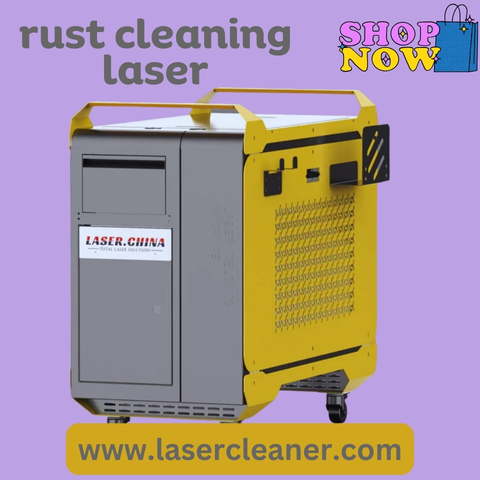




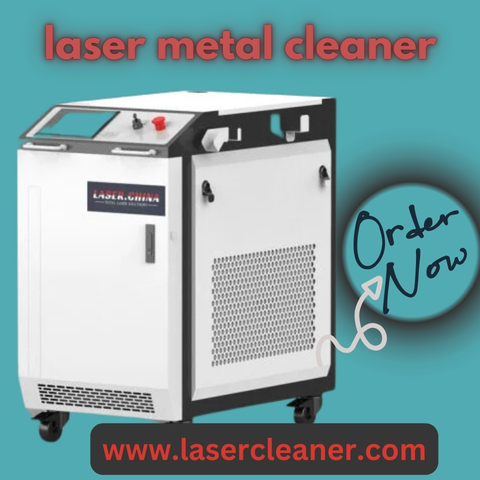
In modern industrial maintenance and manufacturing, the laser metal cleaner has emerged as a revolutionary tool that reshapes the way surfaces are prepared, treated, and restored. Whether it’s removing rust, paint, oxides, or other contaminants, this technology offers a non-contact, high-precision method that ensures accuracy and consistency on every surface it touches. The demand for laser cleaning systems continues to grow as industries prioritize precision, sustainability, and reduced operational downtime.
A laser metal cleaner uses concentrated laser beams to vaporize or ablate unwanted layers from the surface of metals. Unlike traditional methods such as sandblasting, chemical cleaning, or abrasive brushing, it does not rely on consumables or physical contact. The process is purely optical, relying on the controlled energy of light to lift contaminants without damaging the underlying base material. This makes it ideal for applications across automotive, aerospace, electronics, shipbuilding, and manufacturing sectors.
How the Laser Metal Cleaner Works
The operation principle of a laser metal cleaner revolves around the interaction between laser radiation and the material surface. A pulsed or continuous laser beam targets the contaminated area, where the energy is absorbed by the upper layer — typically rust, paint, oil, or oxide. This layer heats rapidly and undergoes evaporation or sublimation, effectively detaching from the substrate.
During this process, the underlying metal remains unaffected because the laser parameters are calibrated to specific absorption rates. Metals reflect most of the laser wavelength while contaminants absorb it more efficiently, allowing for selective cleaning. The result is a spotless surface ready for further treatment such as welding, coating, or bonding — without any risk of corrosion or surface distortion.
Another remarkable feature of this cleaning technology is its adaptability. Operators can adjust laser power, pulse frequency, and scanning speed according to the type of metal and contamination thickness. This ensures consistent results whether the surface is aluminum, stainless steel, copper, or cast iron.
Industrial Applications of Laser Metal Cleaner
The versatility of a laser metal cleaner makes it a preferred choice for numerous industrial tasks. Its applications span across various production environments where cleanliness and precision are critical.
1. Automotive Manufacturing
Car manufacturers and parts suppliers use laser metal cleaners to remove rust, paint residues, and adhesive layers from components. Before welding or painting, surfaces are cleaned to ensure stronger adhesion and corrosion resistance. It’s especially effective for preparing aluminum and steel parts that demand high-quality finishing.
2. Aerospace and Aviation
In aerospace industries, every component must meet stringent cleanliness standards. A laser metal cleaner ensures precise cleaning of turbine blades, engine parts, and structural elements without introducing mechanical stress. The contactless cleaning method eliminates micro-cracks or material fatigue that can occur with abrasive techniques.
3. Electronics and Semiconductor Sector
Laser cleaning provides a controlled, residue-free process ideal for delicate materials. Removing oxides from circuit boards, solder pads, and electrical contacts ensures better conductivity and reliability. The precision of a laser metal cleaner makes it suitable for micro-scale cleaning where other methods are too harsh.
4. Heritage Restoration and Art Conservation
This technology has also found a niche in cultural preservation. Laser cleaning is used to remove corrosion, pollution residues, or restoration varnishes from metallic artworks, sculptures, and historical artifacts without harming their original structure.
5. Shipbuilding and Heavy Machinery
Marine and heavy equipment industries rely on the laser metal cleaner for large-scale rust and coating removal. Its efficiency in treating vast metal surfaces minimizes manual labor and accelerates maintenance schedules.
6. Tool and Mold Refurbishing
Laser cleaning can restore molds, dies, and other production tools by removing surface residues like rubber, resin, or graphite. The process extends tool lifespan and maintains precision without altering their dimensions.
Environmental and Operational Efficiency
Sustainability has become a central focus for industries worldwide, and laser metal cleaners contribute significantly to eco-friendly operations. The cleaning process does not require chemicals, solvents, or abrasive materials, eliminating toxic waste generation and disposal concerns. Additionally, the absence of secondary contamination reduces the need for post-cleaning treatments or rinsing.
Energy efficiency is another aspect that sets laser cleaning apart. The controlled laser beam ensures minimal energy waste while offering repeatable precision. With programmable systems and automated scanning heads, the process can be integrated into robotic arms or CNC setups, enhancing productivity and reducing manual intervention.
From an operational perspective, downtime is minimized. Unlike traditional cleaning techniques that involve lengthy preparation, drying, or part replacement, the laser metal cleaner operates continuously with minimal maintenance. Its digital control system allows easy adjustment and repeatability, ensuring consistent surface quality across large batches.
Technological Advancements
Modern laser metal cleaner systems incorporate fiber laser technology, advanced cooling systems, and real-time monitoring interfaces. Fiber lasers, known for their efficiency and durability, offer stable performance even under demanding industrial conditions.
Software control adds another dimension of precision. Through touchscreen interfaces or PC-based software, operators can program cleaning patterns, adjust focus depth, and monitor beam performance. Some systems even include visual feedback through integrated cameras, enabling real-time inspection and process tracking.
Safety has also evolved in line with technology. Enclosures, sensors, and automatic shut-off systems ensure compliance with workplace safety standards. With these advancements, the laser metal cleaner has become not just a cleaning tool but a complete surface treatment solution integrated into smart manufacturing systems.
Economic Perspective
While the initial investment in a laser metal cleaner may appear higher than conventional cleaning setups, the long-term cost benefits are substantial. The elimination of consumables such as sand, chemicals, or cleaning fluids drastically reduces operational expenses. Moreover, its long service life and low maintenance requirements contribute to a lower total cost of ownership.
Companies adopting laser cleaning report higher productivity rates, improved product quality, and reduced environmental compliance costs. Over time, these factors collectively translate into a faster return on investment. Additionally, the ability to automate the process helps reduce labor costs and ensures consistent output without operator fatigue or error.
The Future of Surface Cleaning
The evolution of laser metal cleaner systems is closely linked with the advancement of smart factories and Industry 4.0 concepts. Integration with robotic arms, automated conveyors, and vision systems allows fully autonomous cleaning operations. As sensors and laser control algorithms improve, cleaning processes are expected to become even faster and more adaptable to complex geometries.
Furthermore, miniaturized and portable laser cleaners are expanding accessibility to small workshops, maintenance teams, and on-site repair operations. These compact units deliver the same high-quality cleaning results, enabling precision work in confined spaces. As technology progresses, affordability and user-friendliness will drive even broader adoption across industries.
Final Thoughts
The laser metal cleaner represents a decisive shift in how industries approach surface preparation and maintenance. By combining precision, sustainability, and efficiency, it offers a modern solution that aligns with global goals for cleaner production and improved operational standards. Its adaptability across different metals and sectors demonstrates its true value as a long-term investment for any organization focused on quality and innovation.
As industries evolve toward more sustainable and automated systems, the laser metal cleaner stands as a cornerstone technology that ensures surfaces remain clean, corrosion-free, and production-ready — setting new standards for the future of industrial cleaning.